Bridging The Digital Gap For Underprivileged Women
From Exclusion to Employment: A Structured Model for Digital Empowerment and Workforce Integration for women
Location: Pune District, Maharashtra
Timeframe: Jan 2026 - Present
Key Stakeholders: Underprivileged Women & Girls, Local Communities, Government Bodies (NIELIT, India AI Mission), CSR Partners, Milaap Peace Foundation
The Problem: A Crisis of Invisible Unemployment
India is home to millions of women who are educated at the secondary level but remain locked out of the formal workforce. Despite completing Class 10 or Class 12, these women face a critical skills gap that prevents them from securing even entry-level office employment.
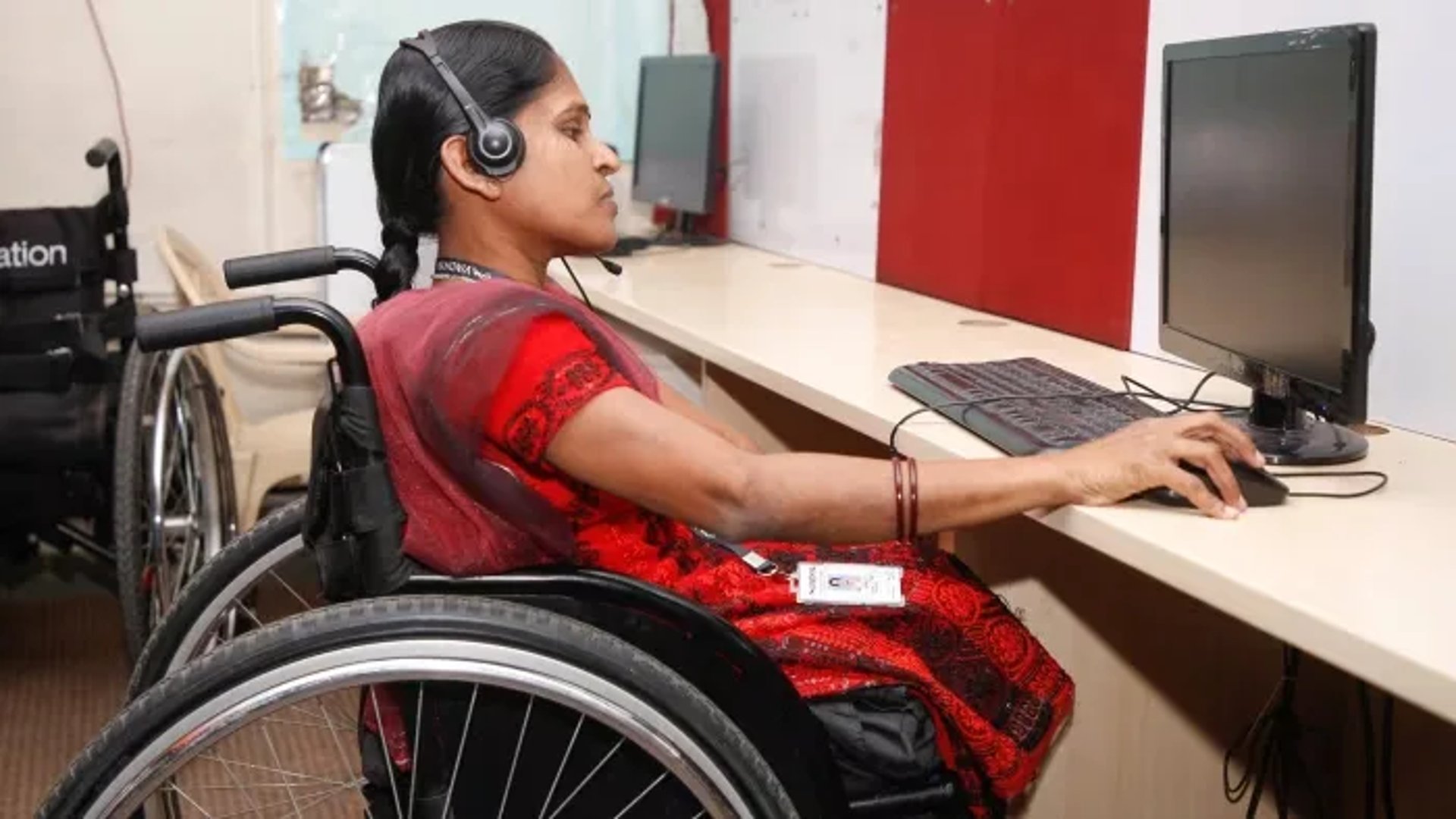
Among them are physically disabled and differently-abled women who face an even steeper barrier — not just of skills, but of access and opportunity. This programme extends a deliberate, priority hand to such candidates, ensuring the most vulnerable are the first to benefit.
The Invisible Unemployed
They are not illiterate. They are not unskilled in life. But in the eyes of the modern workforce, they are invisible.
Housewives who managed households for decades. Girls who passed their boards but never got a computer in their hands. Women from backward and BPL communities who had the will but never the way. Differently-abled women for whom even reaching a training centre was a victory never celebrated.
These women exist in every mohalla. This programme finds them there.
Compounding Factors
No Digital Access
Most of these women have never used a computer, opened an email account, or heard the word "prompt." The digital economy moved on without them.
Financial Exclusion
Private computer courses cost ₹5,000–₹15,000. For a BPL household, that is not a fee — it is a month's survival.
Cultural expectations, family resistance, and lack of safe, local, women-only training spaces keep many from even trying.
Social Barriers
The AI Blindspot
Entry-level jobs now expect basic AI literacy. These women have been excluded from that conversation entirely — not by choice, but by circumstance.
The National and Local Response
The Government of India has recognised this challenge through landmark initiatives:
Digital India Mission: Building a digitally empowered society and knowledge economy, with a focus on last-mile digital inclusion. www.digitalindia.gov.in
Skill India / PMKVY: A nationwide framework to provide industry-relevant skill training to youth and women, with certification and placement linkages. www.skillindiadigital.gov.in, www.pmkvyofficial.org
NIELIT CCC: A government-recognised computer literacy certification that creates a verifiable, portable credential for first-generation digital learners. student.nielit.gov.in
IndiaAI Mission / YUVA AI for ALL: India's commitment to making AI awareness and literacy accessible to every citizen, not just the tech-privileged. indiaai.gov.in
The Critical Gap: Certification Without Connection
Despite these commendable national efforts, the biggest challenge remains the last mile — connecting underprivileged women to these programmes, holding their hand through the learning journey, and ensuring that a certificate translates into an actual job.
Without structured, community-based delivery, mentorship, and placement support, even the best government schemes remain out of reach for the women who need them most. Enrolment happens. Completion rarely does. Employment almost never follows.
This is the gap Milaap Peace Foundation steps into.
Our Intervention: The Three-Model Framework
MILAAP PEACE FOUNDATION designed a targeted, three-pillar intervention model to address this gap directly.
The Literacy Model (Pillar 1 & 2)
Action: We deliver NIELIT CCC-aligned computer literacy and Google Workspace productivity training in community-based, women-only batches of 8–10 candidates over 45 days.
Process: 2 hours daily, 90 hours total. Practical, hands-on, Hindi-supported instruction. No prior computer experience required — only the will to learn.
Outcome: Every candidate becomes independently capable of handling day-to-day office tasks — email, documents, spreadsheets, digital payments, and government portals.
The AI Readiness Model (Pillar 3)
The Employment Model (Pillar 4)
Action: We integrate YUVA AI for ALL modules and Google AI Essentials content to build genuine AI awareness and workplace productivity skills.
Process: Candidates learn to use ChatGPT and Gemini for drafting emails, writing reports, creating summaries, and building documentation — skills that now define the modern office worker.
Outcome: Women who entered the programme never having heard of AI leave as confident, responsible AI users — ready for a workforce that expects it.
Action: The final phase is a dedicated 3-day Employability Bootcamp followed by active placement coordination with a local employer network.
Process: Resume creation, mock interviews, LinkedIn profile setup, job application support, and direct employer interaction events.
Outcome: Candidates leave not just trained, but interview-ready, portfolio-equipped, and connected to real hiring opportunities in Pune and nearby regions.
Priority Commitment
We believe the most excluded must be the first included.
Priority enrollment is given to:
Women with physical disabilities and differently-abled candidates
Women from BPL households
Backward community members
Housewives re-entering the workforce after years of absence
First-generation learners with no prior digital exposure
This is not a checkbox. It is a founding principle
Challenges We Navigate
The journey began by gently dismantling the quiet shame that surrounds unfulfilled potential — redefining a woman's lack of digital skills not as personal failure, but as a systemic gap that was never her fault to begin with. For women who had spent years being told the workforce had moved on without them, our first and most vital task was earning their trust. Demonstrating through action — not promises — that this programme was not another scheme that would disappear, but a committed hand extended to walk with them, every step of the way, from their first time touching a keyboard to the day they walk into their first interview.
Reaching the Truly Unreached
The women who need this programme most are often the hardest to find — they don't attend job fairs, they don't respond to social media, and they don't walk into training centres uninvited. Our community mobilisers go to them.
Dropout Risk
Household responsibilities, family resistance, and lack of childcare can pull women out mid-programme. We actively monitor attendance and provide peer support to prevent dropout.
Convincing small businesses to hire first-generation digital workers requires relationship-building, not just a resume. Our placement coordinator bridges that trust gap.
Employer Mindset
Impact & Outcomes (Measurable Results)
The initiative has catalyzed a coalition of NGOs and civil society organizations, who are now actively exploring ways to integrate this public-private partnership approach into broader policy frameworks to reach from 200 women in Pune to 1,00,000 women across India — one batch, one keyboard, one career at a time."
Foundation Batch — 90-Day Programme
200 women trained across 20 batches
200 NIELIT CCC registrations
200 AI certificates
200 employment-ready portfolios
80–120 women placement in formal employment (40–60% placement rate)
Scalability Batch - 1 Year Programme
200 batches running simultaneously
2,000 government-recognised AI and CCC certifications
800–1,200 women placed in formal employment
First cohort of trained women creating a self-sustaining delivery pipeline
1,00,000 women target pan-India across 15+ states
Programme embedded as a Skill India aligned delivery partner with government initiatives.
500+ certified women trainers, 60,000–70,000 women in formal employment, contributing an estimated ₹300–500 crore annually to household incomes across India
Differently-abled women forming a dedicated inclusion cohort in every state
A nationally recognised Digital Employability Model for Women — adopted, adapted, and scaled by governments, CSR bodies, and NGOs across the country
Every ₹1 invested returning ₹15–20 in economic value through employment, reduced welfare dependency, and household income generation
From a Programme to a National Movement - 5 Year Programme
1 Lakh Women Across India
Qualitative Impact
Restored confidence and economic independence for women written off by the system
One employed woman is our most powerful recruiter — her neighbours enroll not because of a flyer, but because they saw it work.
For differently-abled women, this is not accommodation, it is access. Same certificate. Same training. Same opportunity.
The Road Ahead
The women of underserved communities are not a charity case. They are an untapped workforce — patient, resilient, and ready — waiting only for one structured opportunity.
Deepening in Pune
Establish Pune as a model city for community-based women's digital employability, with permanent batch infrastructure and a growing employer network.
Statewide Expansion
Scale the proven model to other Maharashtra districts — Nashik, Aurangabad, Solapur — where the same gap exists at the same scale.
Work with government bodies, Skill India partners, and CSR networks to make this a replicable national model — adaptable to any city, any community, any batch of women willing to try.
National Blueprint
This programme proves that with the right intervention, structured delivery, and a deliberate commitment to the most vulnerable — we can turn a cycle of exclusion into a virtuous cycle of dignity, employment, and national contribution.
Towards Nation Building
Empowering Lives And Fostering Harmony
Connect
connect@milaappeacefoundation.org
+91-9903990330 +91-7276474576
© 2025. All rights reserved.